 Luxury Inca Trail
Dead Woman's Pass (Warmiwanusca): the Inca Trail's Highest Point
Dead Woman's Pass, called Warmiwanusca in Quechua, is the highest point of the Inca Trail at about 4,215 metres (13,829 feet), though some sources give 4,200 metres. This page covers the name, the elevations around the pass, the day 2 climb from Wayllabamba and Llulluchapampa, the descent to Pacaymayo, the cold at the top, and how to pace the ascent. It also explains what a personal porter, a private group and an oxygen tank change on the climb. For the whole route, see the full Inca Trail guide. The bookable tours are compared on luxury Inca Trail tours.
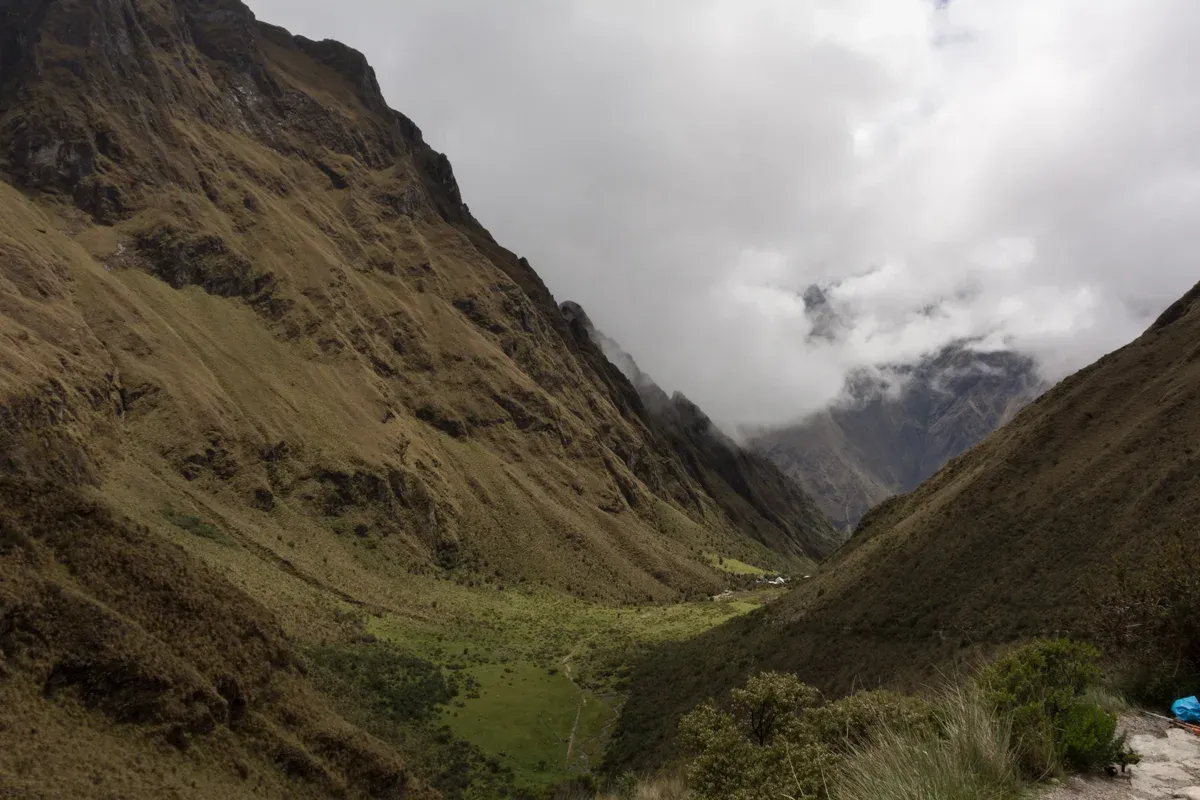
The view from Dead Woman's Pass. Photo: Shriram Rajagopalan, CC BY 2.0, via Wikimedia Commons
Quick answer The highest point of the Inca Trail
Dead Woman's Pass (Warmiwanusca) is the highest point of the Inca Trail at 4,215 metres (13,829 feet), though some sources give 4,200 metres. You cross it on day 2 of the classic 4-day trek, after a climb of 4 to 5 hours from camp. It sits in Machupicchu District, Urubamba Province, and the Pacaymayo campground lies about 600 metres below it. Operators describe day 2 as the most demanding day of the trek.
Key takeaways
- The climb starts early on day 2, around 5:30 a.m. with coffee or coca tea, from Wayllabamba up through Llulluchapampa camp at about 3,800 metres (12,500 feet).
- See which classic 4-day treks cross the pass and what each price includes, from the $798 group trek to the $6,222 private one.
- A personal porter on the Private 5-Day Inca Trail carries 6 kg of your gear, which lightens the load on the climb.
- Cold is real at the top: above 3,500 metres temperatures can drop below freezing at night in any month. Pack layers and read the altitude and seasons guide.
The Pass in Figures
Warmi Wañusqa is the summit of the whole trail and the numbers around it explain why day 2 is the day people fear.
Why It Is Called Dead Woman's Pass
The Quechua name Warmi Wañusqa breaks down into warmi (woman), wañuy (to die) and the suffix -sqa, so it means a woman who died. The name comes from the silhouette of a woman lying on the Andes. The clearest views of that silhouette are from Pacaymayo camp and from Runkurakay, the ruin at 3,760 metres on the far side. The pass lies in Machupicchu District, Urubamba Province, southwest of Patallaqta. You only reach it on the classic 4-day trek with an authorised agency, since it is not on the short trail from Km 104 or the one-day route.
The elevation itself has a small conflict in the sources. The main figure is 4,215 metres (13,829 feet), but the pass's own reference page gives 4,200 metres (13,780 feet), and trekking operators quote anywhere from 4,200 to 4,222 metres. What matters for pacing is that the climb from camp takes 4 to 5 hours.
Every Point Around the Pass
The table below gathers the elevations from the research sources, including the conflicts, so you can see the full profile of day 2 and the two passes that follow it. The trail as a whole runs about 42 kilometres (26 miles), with other sources giving 44 to 45 kilometres, and gains about 2,500 metres (8,200 feet) in total, and the pass is the top of that gain.
Elevation Table
Figures come from the sources named below. Where they disagree, both numbers are shown.
| Point | Elevation | Note |
|---|---|---|
| Piscacucho (Km 82), trailhead | 2,709 m | Other sources give 2,600 m or 2,800 m |
| Wayllabamba camp | not stated | Porters are weighed here a second time on day 2 |
| Llulluchapampa camp | about 3,800 m (12,500 ft) | Common camp before the final ascent |
| Dead Woman's Pass (Warmi Wañusqa) | 4,215 m (13,829 ft) | Highest point of the trail. The pass's own page gives 4,200 m (13,780 ft) |
| Pacaymayo campground | about 600 m below the pass | Long descent after the summit |
| Second pass (Runkuraqay) | about 3,950 m | Runkuraqay ruin sits at 3,760 m |
| Third pass | not stated | Beyond Phuyupatamarca, which sits at 3,600 m to 3,670 m depending on the source |
The Other Two Passes
The trail has three high passes, and Dead Woman's Pass is the first and the highest. The second pass sits at about 3,950 metres. It comes after the descent to Pacaymayo.
The ruin of Runkuraqay, whose name comes from Quechua runku (basket) and raqay (shed or ruin), stands near it and was heavily restored in the late 1990s. From Runkurakay you get views back to Dead Woman's Pass, which is one of the best places to appreciate the shape that gave it the name. The third pass lies beyond Phuyupatamarca, a site with five ceremonial fountains at 3,600 to 3,670 metres depending on the source.
No elevation figure for the third pass itself appears in the sources. After it, the trail drops roughly 1,500 carved steps over about 1,000 metres of descent to Wiñay Wayna, which has as many as 19 springs.
Sources: Wikipedia, Inca Trail to Machu Picchu, Wikipedia, Warmi Wañusqa
Day 2, Step by Step
Day 2 is the day the pass owns. Operators describe it as the most demanding day of the trek and the most difficult for many hikers.
The Morning Start
Day 2 starts around 5:30 a.m. with coffee or coca tea. You eat breakfast, pack, and set off while the air is still cold. By this point you have walked day 1 from Km 82, the official trail entrance at about 2,709 metres (other sources give 2,600 to 2,800 metres) in Ollantaytambo district, where your original passport and the operator's permits for trekkers, porters, guides and cooks were checked.
Porters are weighed again at Wayllabamba on day 2, after the first weigh-in at the trail entrance.
The Climb from Wayllabamba and Llulluchapampa
The climb from camp to Dead Woman's Pass takes 4 to 5 hours. The trail rises through the Llulluchapampa campsite at about 3,800 metres (12,500 feet). From there the path steepens into the final ascent, and the trees thin out.
The terrain near the pass is rockier and more exposed, with fewer trees for shelter from sun or wind. This is the section where altitude makes itself felt, because you are climbing well above the 3,000 metre line where sleeping altitude should rise no more than about 500 metres a day. Pacing matters more than speed.
At the Top
The pass itself is at about 4,215 metres (13,829 feet), or 4,200 metres on some sources. It stands nearly 1,800 metres higher than Machu Picchu, which gives a sense of how much air you have climbed out of. Weather at the pass ranges from cool rain to blazing sun to strong wind, and temperatures above 3,500 metres can drop below freezing at night in any month.
Standing still in the wind at this height gets cold fast, so keep moving after a short pause. Treat the top as a checkpoint, not a finish line. Two more passes and a long stone staircase still stand between you and Machu Picchu.
The Descent to Pacaymayo
From the summit the trail drops about 600 metres to the Pacaymayo campground. The descent is hard on the knees after a 4 to 5 hour climb. The reward is the view: Pacaymayo is one of the two best viewpoints of the woman-shaped silhouette, along with Runkurakay on the far side of the next pass.
The second pass at about 3,950 metres comes next. Dry season footing from June to September is very stable, and nights in June and July can reach freezing, so plan your layers around the camp, not just the summit.
The Hardest Day on the Inca Trail: Dead Woman's Pass
Day 2, from camp to the top of the pass. Third-party video by Jess and Dave. This site did not shoot it and has no relationship with the creator.
Altitude, Cold and Pacing
The pass is high enough that altitude, not fitness, decides how the morning feels.
Acclimatisation Before You Start
Altitude sickness can appear from about 2,500 metres, and Cusco sits at about 3,400 metres (11,155 feet), though sources range from 3,200 to 3,450 metres, so the trail starts at an altitude where symptoms are possible. A useful rule: above 3,000 metres, sleeping altitude should rise by no more than about 500 metres a day. Spending a few nights in Cusco or in the Sacred Valley, where Ollantaytambo and Pisac sit at about 2,800 to 2,870 metres, helps before the trek.
A typical acetazolamide prevention dose is 125 mg twice daily starting the day before ascent, but that is a decision for your doctor, not this guide.
Symptoms to Watch on the Climb
Common symptoms are headache, nausea, fatigue and poor sleep. Any of them can show up on the climb to the pass. What matters is pace.
Slow down before the symptoms force you to. A steady slow rhythm with short steps beats bursts of speed followed by stops, especially on the exposed upper section where the trail is rockier and the wind stronger. Drink at every water stop, and tell your guide early if a headache worsens rather than fades.
Layers for a Pass That Changes Its Mind
Weather at the pass ranges from cool rain to blazing sun to strong wind, so you need all three defenses within reach. Dry season days are crisp and sunny, but nights are freezing, especially in June and July, and above 3,500 metres temperatures can drop below freezing at night in any month. A rain jacket, a warm layer and a hat in your daypack cover most of it, since your main luggage rides with the porters.
Rain returns in October and November and increases through the rainy season, and February is the wettest month, and the trail closes every February for maintenance.
How a Personal Porter Changes the Climb
Porters on the trail may carry at most 20 kg each, including 4 kg of their own belongings (some sources say 25 kg including 5 kg), a rule in force since porter protections began in 2001 and strictly enforced since 2002. Companies that break the weight limit risk a heavy fine and loss of licence. What a personal porter means for you is a much lighter daypack.
On the 4-Day Inca Trail with Vistadome Train each hiker gets a personal porter for up to 7 kg, and the 4-Day Inca Trail with Panoramic Train supplies a 7 kg duffle bag with porter service to match. That leaves you carrying water, layers and snacks on the 4 to 5 hour climb.
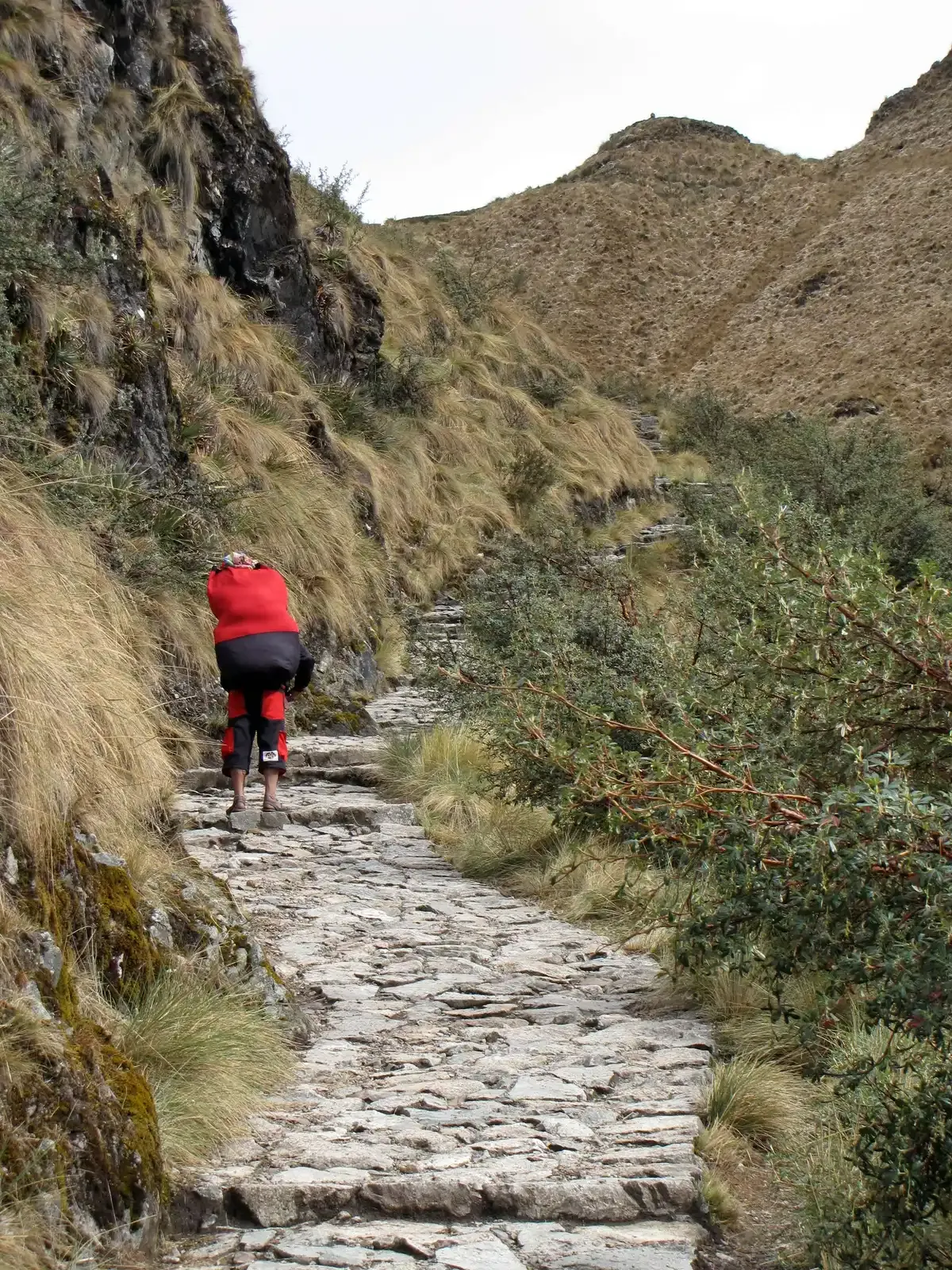
On the way up to Dead Woman's Pass on day 2. Photo: sergejf, CC BY-SA 2.0, via Wikimedia Commons
What a Luxury Tour Changes on the Pass
No tour removes the climb, but group size, porter support and backup equipment change how it feels.
Honest First: What No Tour Can Change
Every classic 4-day trek crosses Dead Woman's Pass at about 4,215 metres, and none of them shortens the 4 to 5 hour climb. Not every tour includes the permit or the Machu Picchu ticket, so read the inclusions before booking. The Premium 4-Day Inca Trail Trek at $1,499 includes Inca Trail entrance fees but leaves the return train out as an exclusion, and the Private 5-Day Inca Trail does not state permit inclusion in its list, though it advises booking at least five months ahead because permits sell out.
Prices here are the card prices only.
Private Pace and Small Groups
A private group sets off when you are ready and walks at your pace, which on a 4 to 5 hour altitude climb is worth more than any piece of gear. The Private 4-Day Inca Trail at $1,200 runs as a private tour with porters and cooks, and the Luxury 4-Day Inca Trail at $6,222 is a private, fully personalised trek with a massage therapist at every camp. If a private price is too much, the 4-Day Small-Group Inca Trail at $980 caps the group at 8 and includes a sleeping bag and air mattress.
All the listings compared here, with their group sizes and inclusions, sit in the comparison table on the luxury Inca Trail tours homepage.
Oxygen, Communication and Backup
Several listings carry emergency oxygen and a first aid kit as standard, which matters most on day 2 at 4,215 metres. The Premium 4-Day Inca Trail Trek includes an emergency oxygen tank and 24-hour support, the Private 5-Day Inca Trail carries an oxygen bottle and first aid kit, and the 4-Day Small-Group Inca Trail lists an oxygen tank and first aid kit, and the panoramic-train trek adds satellite phones. No listing promises a guide will carry you over the pass, so treat oxygen as backup, not a plan.
Day 2 starts around 5:30 a.m. with coffee or coca tea.
Pass Tips: Do and Don't
Do
- Do spend a few nights in Cusco before the trek, because altitude sickness can appear from about 2,500 metres and sleeping altitude should rise no more than about 500 metres a day above 3,000 metres.
- Do carry a rain jacket, a warm layer and a hat in your daypack, because weather at the pass ranges from cool rain to blazing sun to strong wind.
- Do book with an authorised agency well ahead, because permits are limited under the quota system in place since 2001 and operators advise booking at least five months ahead.
- Do keep drinking and eating on the climb, because headache, nausea and fatigue are the common symptoms.
- Do start slow and hold one rhythm for the whole 4 to 5 hour ascent, because the last section above Llulluchapampa at about 3,800 metres is where pace failures cost the most.
Don't
- Don't rush the final hour to the summit, because the terrain is rockier and more exposed with fewer trees and strong wind.
- Don't linger too long at the summit, because two more passes follow, the second at about 3,950 metres, and Pacaymayo camp is still 600 metres below.
- Don't count on a warm night at Pacaymayo, because temperatures above 3,500 metres can drop below freezing at night in any month and June and July nights can reach freezing.
- Don't trek in February, because that is the wettest month and the trail closes every February for maintenance.
Dead Woman's Pass FAQ
What is the altitude of Dead Woman's Pass?
The main figure is 4,215 metres (13,829 feet), making it the highest point of the Inca Trail. Some sources give 4,200 metres (13,780 feet) and operators quote up to 4,222 metres, so treat any of the three as correct. You can see every elevation around the pass in the table above.
How long does it take to climb Dead Woman's Pass?
The climb from camp to the pass takes 4 to 5 hours, starting from a day 2 wake-up around 5:30 a.m. with coffee or coca tea. The climb passes Llulluchapampa camp at about 3,800 metres. The full classic 4-day itinerary puts the climb in context.
Why is it called Dead Woman's Pass?
The Quechua name Warmi Wañusqa combines warmi (woman), wañuy (to die) and the suffix -sqa, meaning a woman who died. The name describes the silhouette of a woman lying on the Andes, best seen from Pacaymayo camp and Runkurakay.
Which day of the Inca Trail is the hardest?
Day 2 is the most difficult day for many hikers, because it holds the 4 to 5 hour climb to the highest point of the trail followed by a descent of about 600 metres to Pacaymayo. Operators describe it as the most demanding day of the trek. See what each operator includes on that day in the comparison table.
Does the short Inca Trail cross Dead Woman's Pass?
No. The pass can only be seen on the classic 4-day trek with an authorised agency. The short 2-day trail starts at Km 104 well below the pass and ends at the Sun Gate instead.
How cold does it get at Dead Woman's Pass?
Above 3,500 metres temperatures can drop below freezing at night in any month, and Inca Trail nights in June and July can reach freezing. At the pass itself, weather ranges from cool rain to blazing sun to strong wind. Pack for all three and check the best time to hike the Inca Trail.
The Private 5-Day Inca Trail at $1,710 per person gives every hiker a personal porter for 6 kg, a private pace over the pass and an oxygen bottle on the climb.
5.0 rating from 32 reviews. Non-refundable, so confirm your dates before booking.